
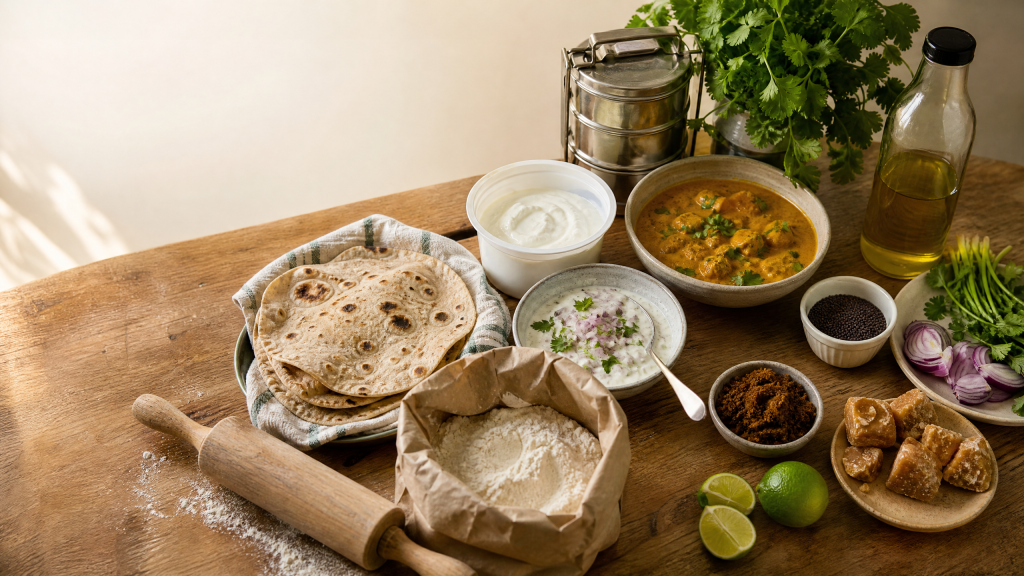
When the recipe says one thing and your local supermarket says another, you can still make a very good dinner.
There is a particular kind of optimism that begins with deciding to make your favourite home-style Indian dish on a Tuesday evening. You picture soft rotis, a quick tadka and a cooling bowl of dahi. Then you reach the supermarket shelf and discover that the ingredient you took for granted is missing, tucked into an unfamiliar aisle, or only available in a packet far too large for tonight’s dinner.
That is not a cue to abandon the plan. It is an invitation to cook by function, not panic. Indian cooking has room for judgement: something creamy, something sour, something to carry spice, something to make a dough supple, something to bring sweetness or brightness. Once you know what an ingredient is doing, a good UK supermarket stand-in becomes much easier to spot.
These swaps are not identical to their originals. An Indian grocer remains best for freshness, range and the ingredients no substitute can replicate. This is the useful gap between visits: enough confidence to make dinner.
The rule of the hack list: replace the ingredient’s job in the dish, then adjust slowly. A swap that works in raita may be wrong for a curry, and a swap that works in a curry may be terrible in a sweet dish.
The practical swap list
Before reaching for a substitute, ask what the missing ingredient contributes. Dahi may bring tang and creaminess. Atta gives roti its comforting chew. Tamarind adds sharp, fruity depth. Kashmiri chilli is often more about colour than heat. The answer tells you what to buy, and what not to expect. For a useful introduction to the core spices that build flavour in Indian cooking, see BBC Food’s guide to the five spices you should never be without.
| If the recipe calls for | The practical supermarket swap | Use it like this | Where it will not quite work |
|---|---|---|---|
| Dahi or plain curd | Full-fat plain natural yogurt, or Greek-style yogurt thinned with water | Use as is for raita. Whisk smooth before adding to a marinade or gravy. | Sweetened yogurt changes the dish. Very thick Greek yogurt may need loosening. |
| Atta for rotis | Two parts wholemeal flour to one part plain white flour | Knead to a soft dough, rest for 20 minutes, then roll thinly. | It will not reproduce fresh chakki atta exactly, but it makes a reliable weeknight roti. |
| Besan | Gram flour | This is usually the same ingredient under a different name. Check baking, free-from and world-foods aisles. | Avoid blends with added ingredients. |
| Paneer | Halloumi, rinsed briefly if very salty, then browned in a dry pan | Add near the end of a fast curry or tikka-style traybake. | Halloumi is saltier and springier. It is a stand-in, not soft, milk-fresh paneer. |
| Coconut cream | The solid layer from a chilled tin of full-fat coconut milk | Spoon out the thick part for a rich sauce, then loosen with the remaining liquid. | Reduced-fat coconut milk rarely gives the same result. |
| Ghee | Unsalted butter with a small splash of neutral oil | Use for a quick tadka, rice or finishing a dal. | It lacks ghee’s toasted, nutty depth and is less forgiving over high heat. |
| Mustard oil | British rapeseed oil plus black or brown mustard seeds | Warm the seeds in oil until they crackle, then build the dish. | The distinct pungency of mustard oil will be missing. |
| Tamarind paste | Pomegranate molasses plus lemon juice | Begin with roughly two parts molasses to one part lemon juice, then add by the teaspoon. | Best for a tangy sauce, not a recipe centred on tamarind. |
| Amchur | Fresh lemon or lime juice | Add at the end of cooking to keep the brightness alive. | It cannot deliver mango powder’s dry, fruity note in a spice blend. |
| Jaggery | Dark muscovado sugar | Start just below the recipe amount. Its molasses note suits dals, chutneys and tangy sauces. | It is less mineral and complex than good jaggery, especially in sweets. |
| Kashmiri chilli powder | Sweet paprika plus a small pinch of cayenne or hot chilli powder | Let paprika supply colour and add heat in tiny increments. | Smoked paprika will take the flavour somewhere else. |
| Hing or asafoetida | A little garlic and onion, where the recipe and household allow | Add to the base for savoury depth. | It is not appropriate for Jain cooking and cannot duplicate hing’s singular note. |
| Fresh curry leaves | No true substitute. Use lime zest for a different lift, or leave them out. | Build a confident tadka with mustard seed, chilli and garlic instead. | When curry leaves are central to the dish, wait until you can buy them. |
The swaps that do the most work
Greek yogurt works because it handles raita and marinades well. Adjust for texture rather than assuming thickness means flavour: a few drops of lemon and a splash of water can make a rich yogurt feel fresher. In a hot curry, lower the heat before adding it and stir steadily.
Roti is where many cooks become unnecessarily hard on themselves. Atta has real character, but a wholemeal-and-plain-flour blend is forgiving when the dough is soft and rested. Avoid adding too much flour to eliminate stickiness. Use a light dusting as you roll, and accept that the first one may not be round. It will still be excellent with dal.
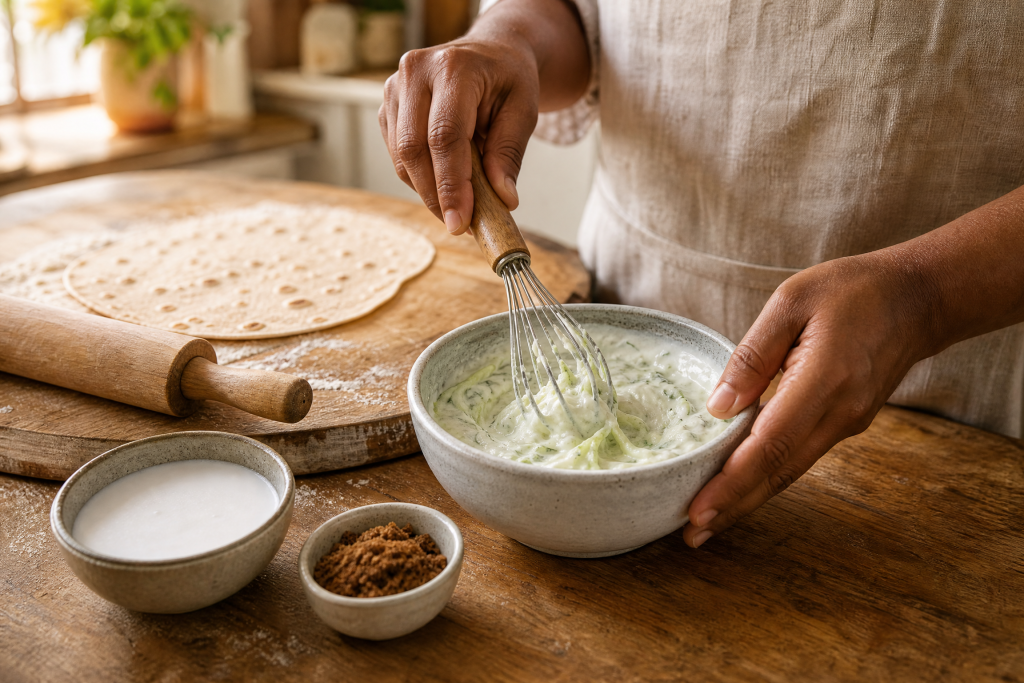
A chilled full-fat coconut-milk tin does two jobs: the solid portion adds richness, while the liquid loosens the sauce. It keeps a curry creamy without opening two products.
Tamarind, amchur and Kashmiri chilli need a different mindset. They are not simply sour or hot. They create a particular balance. Pomegranate molasses plus lemon makes a plausible tamarind-style rescue because it brings fruitiness with its acidity. Lemon should go in late where amchur would finish the dish. For Kashmiri chilli, separating the jobs is the hack: paprika gives the red colour; cayenne brings the heat.
Keep a small rescue shelf
You do not need a second supermarket’s worth of food at home. Full-fat yogurt, coconut milk, muscovado sugar, citrus, sweet and hot chilli powders, black mustard seeds and gram flour cover a surprising number of gaps.
Buy specialist ingredients when you want the proper ingredient and have a plan for it. Buy versatile items when they will earn their space through several meals. A jar of tamarind paste is worth having if you cook with it often, but a good back-up route can stop an unnecessary trip tonight.
Know when not to hack it
Some ingredients carry the identity of a dish, not merely one note within it. Fresh curry leaves, good jaggery, hing, mustard oil, fresh coconut and a favourite regional masala can belong here. Sometimes the respectful answer is to make a different dish, postpone it, or visit the Indian shop. Substitution should build confidence, not erase regional cooking.
That distinction matters when sharing cooking advice. Say, “this worked for my quick Tuesday dal”, rather than, “this is how the dish is made”. Offer the reason behind the choice. Readers who grew up with the ingredient feel seen, while readers who are learning get a useful principle rather than a vague shortcut.
The most valuable hack list will be your own. Note what your nearest supermarket reliably carries, what your family enjoys, and which swaps have passed the only honest test: did everyone ask for seconds? Within a few meals, you will have a confidence-building map of your own kitchen. Then, when you make it to the Indian grocer, go with curiosity rather than a sense of correction. The supermarket hack gets dinner on the table. The Indian grocer opens the door to the full conversation.
Build your Indian Kitchen Basics
Looking for the few items that make these swaps easier? See LinkedIndian’s independently chosen Indian Kitchen Starter Kit: a tawa, rolling pin, steel storage tins, spice grinder and pantry basics. Ad: LinkedIndian receives a share of sales from clearly marked links in this guide.